 301194963b
一些检查失败了
automerge / automerge (push) Has been cancelled
react-native-android-build-apk / AssembleRelease (push) Has been cancelled
Build macOS M1 / Main (push) Has been cancelled
Joplin Continuous Integration / Main (macos-15-intel) (push) Has been cancelled
Joplin Continuous Integration / Main (ubuntu-22.04) (push) Has been cancelled
Joplin Continuous Integration / Main (ubuntu-22.04-arm) (push) Has been cancelled
Joplin Continuous Integration / Main (windows-11-vs2026-arm) (push) Has been cancelled
Joplin Continuous Integration / Main (windows-2025) (push) Has been cancelled
Joplin Continuous Integration / ServerDockerImage (ubuntu-22.04) (push) Has been cancelled
Joplin Continuous Integration / ServerDockerImage (ubuntu-22.04-arm) (push) Has been cancelled
Joplin UI tests / Main (ubuntu-22.04) (push) Has been cancelled
Joplin UI tests / Main (windows-2025) (push) Has been cancelled
Joplin UI tests / Mobile (push) Has been cancelled
Close stale issues / ProcessStaleIssues (push) Has been cancelled
120 行
8.8 KiB
Markdown
120 行
8.8 KiB
Markdown
---
|
|
forum_url: https://discourse.joplinapp.org/t/50794
|
|
---
|
|
|
|
# What's new in Joplin 3.7
|
|
|
|
Joplin 3.7 is the release where AI arrives in the app. A new chat panel lets you ask questions about the note you're working on, semantic search finds notes by meaning rather than by keyword, and a built-in MCP server allows external tools to work with your notes.
|
|
|
|
Alongside this, the desktop app gains whiteboards - a new way to lay out notes and ideas visually - while mobile continues its interface redesign. Both platforms benefit from a more capable Markdown table editor and a number of sync reliability improvements.
|
|
|
|
## Improvements across desktop and mobile
|
|
|
|
### A real table editor in the Markdown editor
|
|
|
|
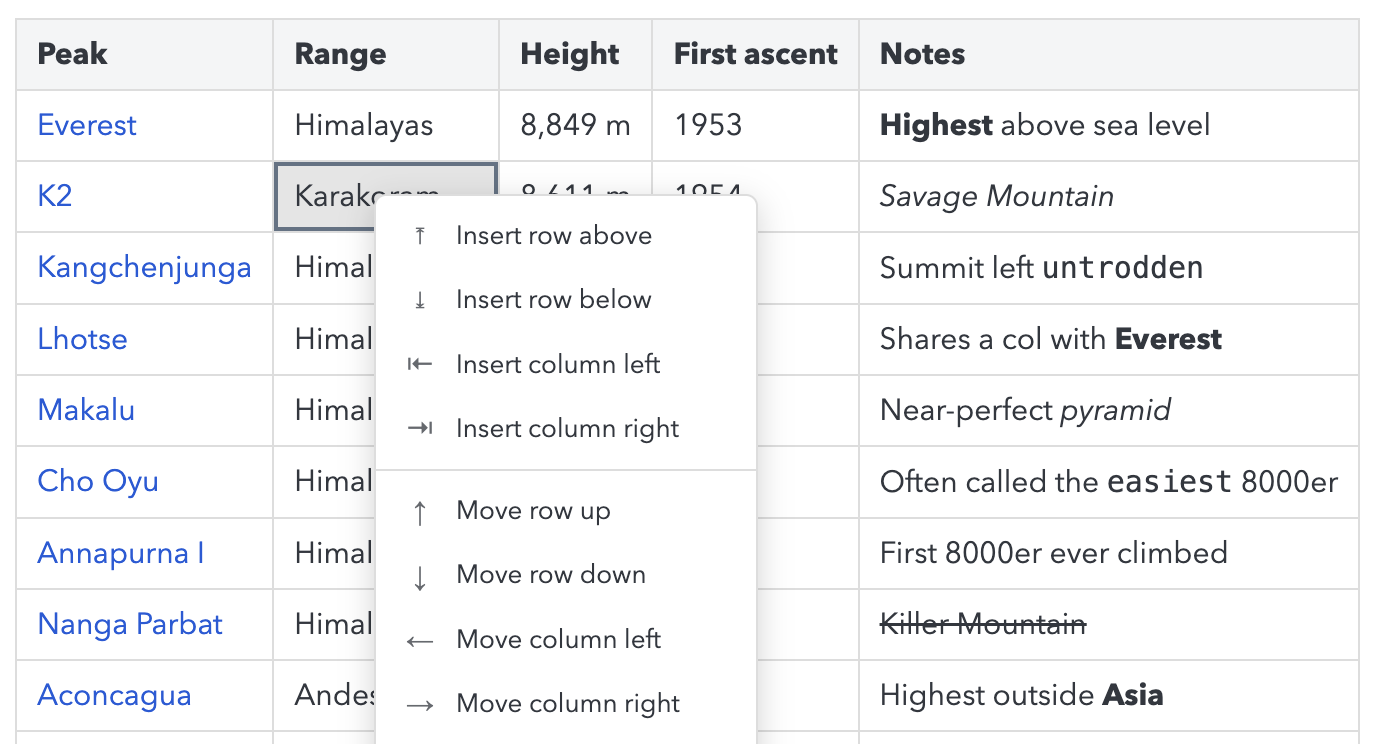
Editing Markdown tables has always been the least pleasant part of writing in plain text. Joplin 3.7 adds an interactive table editor to the Markdown editor, with a context menu to add and delete rows and columns.
|
|
|
|
|
|
|
|
Because the editor is shared between platforms, this is available on mobile as well.
|
|
|
|
### More reliable syncing
|
|
|
|
Syncing is faster and safer this cycle. Deleting a lot of notes at once on Joplin Server and Joplin Cloud no longer takes as long, and if you happen to be typing in a note just as it's being updated from another device, your changes are no longer at risk of being overwritten.
|
|
|
|
### Faster startup
|
|
|
|
Joplin no longer processes plugin files that don't need processing at startup, which noticeably reduces launch time for users with several plugins installed.
|
|
|
|
## Desktop-specific improvements
|
|
|
|
### AI features (Beta)
|
|
|
|
The headline addition of this release is a set of AI features built into the app.
|
|
|
|
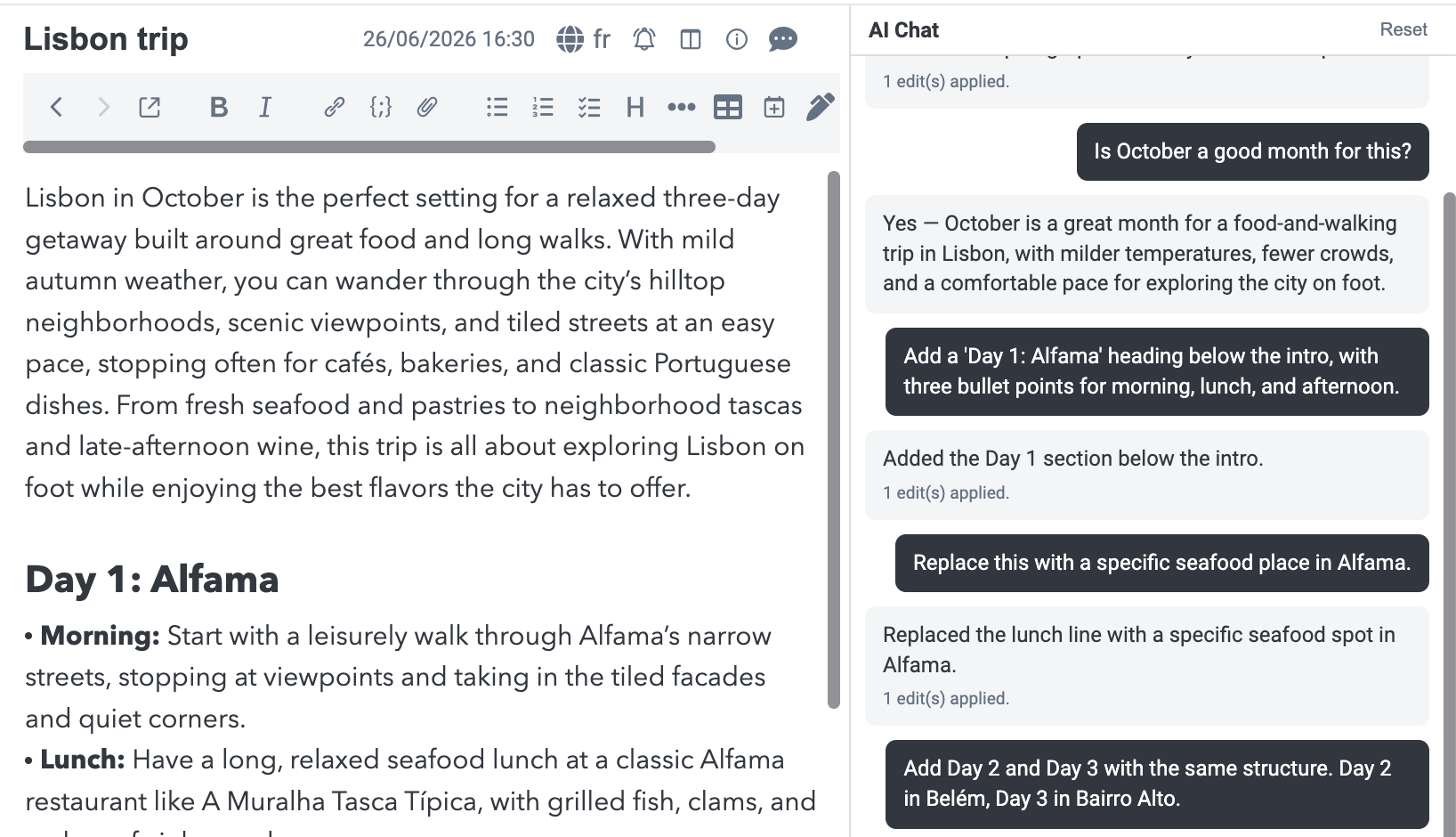
The **chat panel** sits alongside the current note and can answer questions about it, summarise it, or make edits to it on your behalf, as well as read images in your notes.
|
|
|
|
To use the AI features you need a provider, and this release introduces **Joplin Cloud AI** to make that as simple as possible. If you already sync with Joplin Cloud, you can simply turn it on and start using the chat panel right away - there's no API key to obtain, and nothing to configure.
|
|
|
|
If you would rather use your own provider, that remains possible: the chat panel also works with your own OpenAI or Anthropic key. It can equally be pointed at a local model running on your own machine, in which case your notes never leave your computer at all.
|
|
|
|
|
|
|
|
**Semantic search** is now available in the sidebar and in Go To Anything. Unlike the regular search, it matches on meaning rather than exact words, so a search for "holiday plans" can surface a note titled "Trip to Portugal".
|
|
|
|
This is powered by a new note embeddings indexer, which runs in the background and indexes both note titles and content.
|
|
|
|
Finally, all of this is available to plugin authors too. Plugins can now hold conversations with a model, run semantic searches, and work with the note index directly - which opens the door to a whole new class of plugins, from automatic tagging and summarising to tools that surface related notes as you write.
|
|
|
|
All the AI features are marked as **Beta**: they work, but they are new, and we expect to refine them based on how people actually use them.
|
|
|
|
### MCP server
|
|
|
|
Joplin now includes an [MCP server](https://modelcontextprotocol.io/), which means external AI tools and assistants can read from and write to your notes through a standard protocol. If you already use an MCP-capable app such as Claude, it can now work directly with your Joplin data.
|
|
|
|
### Whiteboards
|
|
|
|
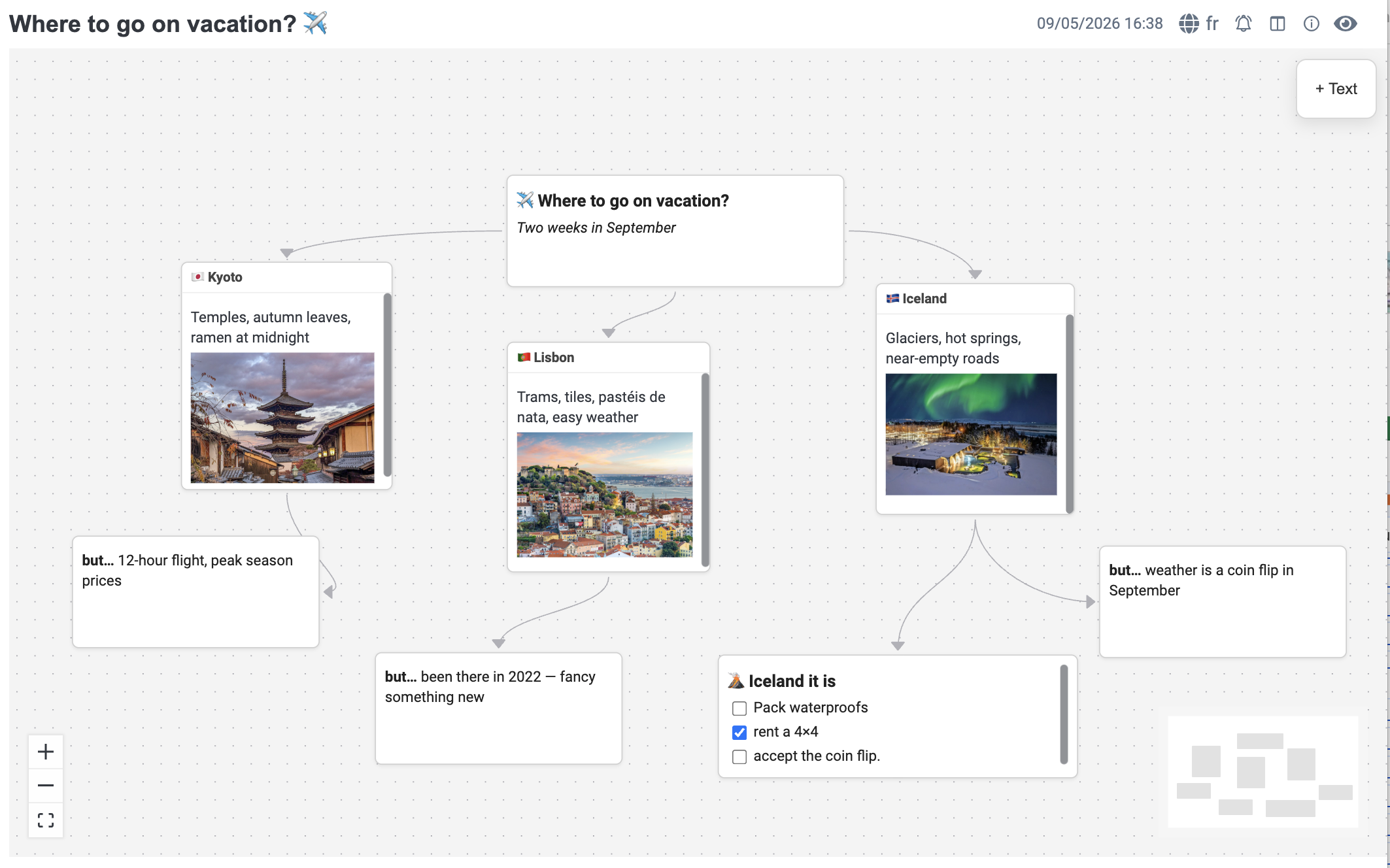
A brand new feature on desktop: whiteboards let you arrange notes, files and free-form cards on an infinite canvas, and connect them with labelled arrows.
|
|
|
|
Notebooks and tags are good at filing things away, but they say little about how your notes relate to one another. A whiteboard gives you that missing view: you can map out a project, plan a piece of writing, or lay out the pieces of a problem and see the connections between them at a glance.
|
|
|
|
Cards and groups can be coloured, and files can be dragged and dropped straight onto the canvas.
|
|
|
|
|
|
|
|
### Importing from other apps
|
|
|
|
Joplin 3.7 adds support for importing an Obsidian vault, on both desktop and the CLI, making it straightforward to move over from Obsidian while keeping your notes and their structure.
|
|
|
|
The Evernote importer now resolves cross-notebook links in many cases where they were previously lost.
|
|
|
|
The OneNote importer also received another round of fixes, in particular around note order, printouts and handwriting.
|
|
|
|
### Publishing and sharing
|
|
|
|
Joplin Cloud users could already publish a note to the internet as a public page. It is now possible to publish a **whole notebook** at once.
|
|
|
|
The notes are published together, with their links between each other preserved, which effectively turns a notebook into a small website: a piece of documentation, a recipe collection, a set of course notes, or anything else you want to share as a whole rather than one page at a time. Anyone with the link can read it, and it stays up to date as you edit the notes in Joplin.
|
|
|
|
And when sharing a notebook, email addresses are now auto-completed, which makes sharing with the same people repeatedly much quicker.
|
|
|
|
### Settings search
|
|
|
|
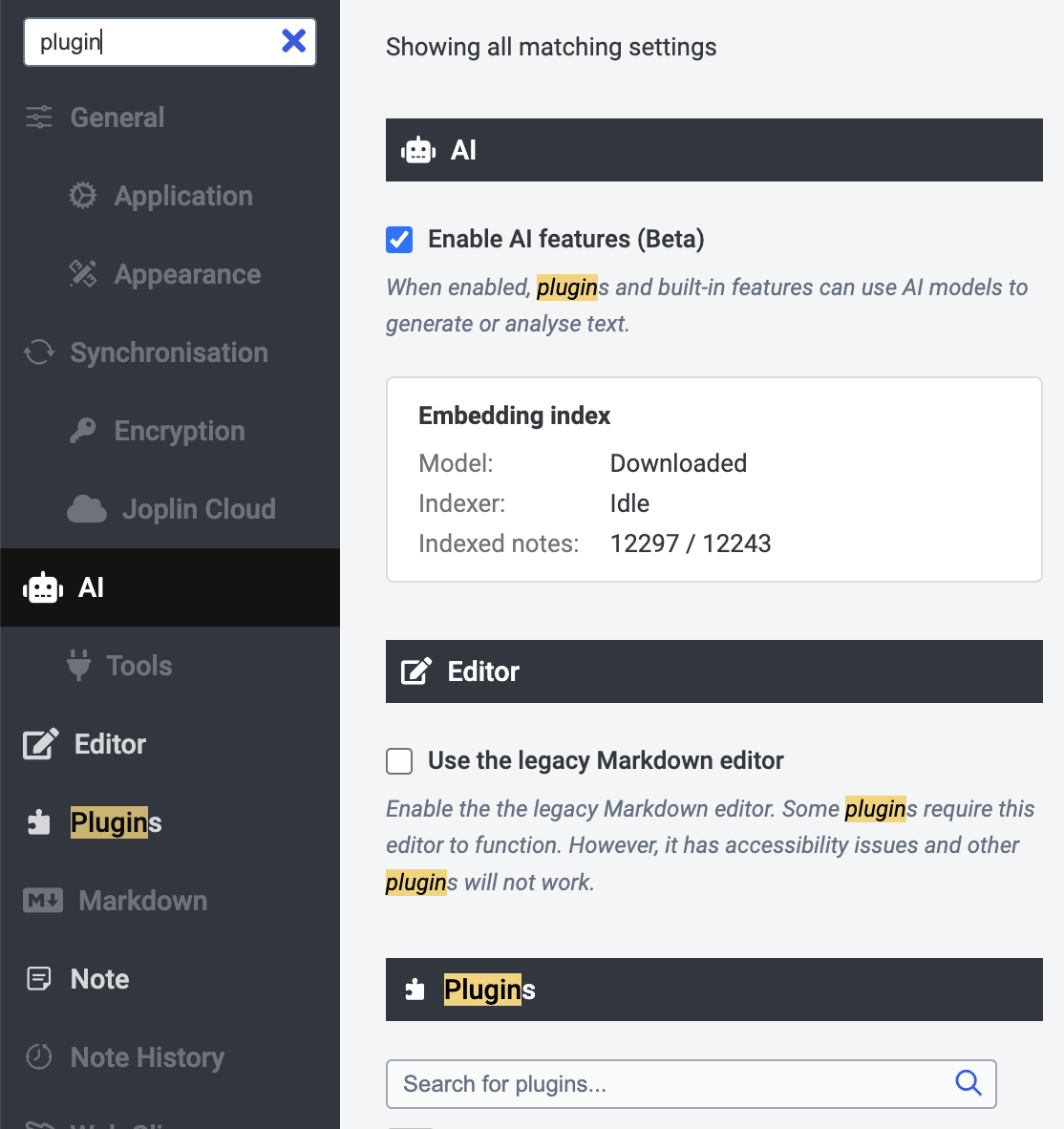
Joplin has accumulated a lot of settings over the years, and it is not always obvious which section holds the one you need. The configuration screen now has a search box: type what you are after, and the matching settings appear, wherever they happen to live.
|
|
|
|
|
|
|
|
### Post-quantum encryption for connections
|
|
|
|
Joplin desktop now supports post-quantum cryptography (PQC) for TLS connections. This protects your synchronisation traffic against "harvest now, decrypt later" attacks, where encrypted data captured today could be decrypted by a quantum computer in the future.
|
|
|
|
### Easier installation on Linux
|
|
|
|
The Linux AppImage no longer depends on the deprecated `libfuse2` library. On many distributions, installing Joplin used to mean first tracking down and installing that dependency by hand - it should now simply run out of the box.
|
|
|
|
## Mobile-specific improvements
|
|
|
|
### The interface redesign continues
|
|
|
|
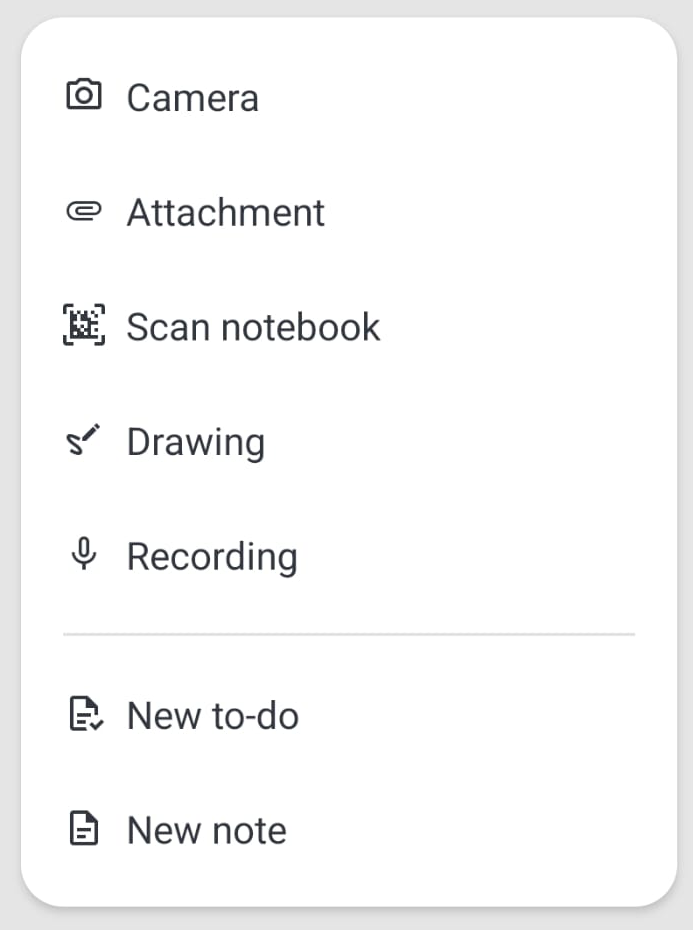
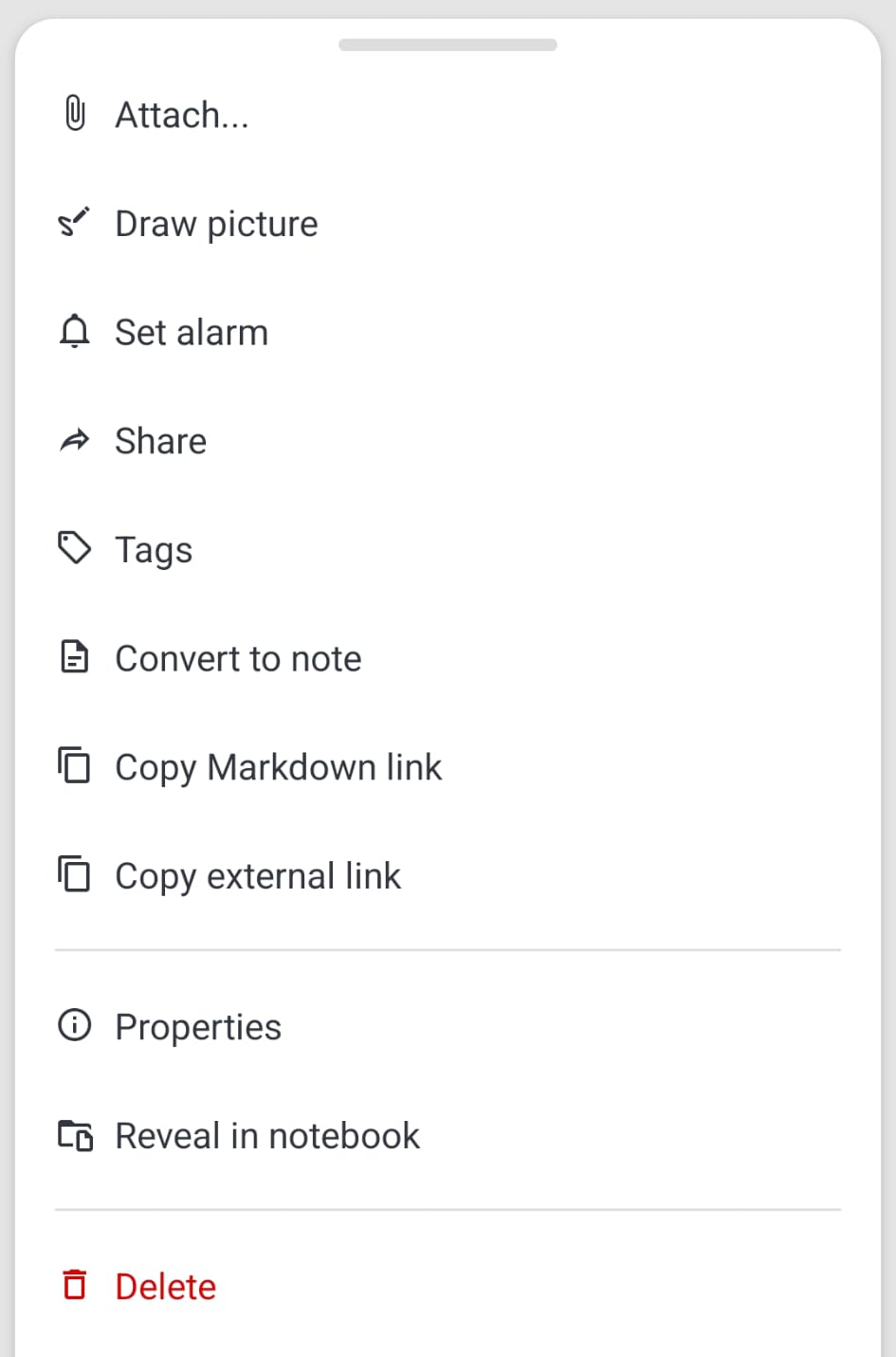
The mobile redesign that started in previous releases carries on through 3.7, this time focusing on the menus you reach for constantly - creating a note, acting on one, or long-pressing a notebook. They are now easier to read at a glance, and their options are laid out more sensibly, so common actions take less hunting. The search screen has had the same treatment.
|
|
|
|
Dialogs have been tidied up too, with buttons always appearing in the same order throughout the app - a small thing, but it means you stop having to check which side "Cancel" is on before tapping.
|
|
|
|
|
|
|
|
|
|
|
|
### Faster encryption
|
|
|
|
The native crypto module has been refactored, which makes encryption and decryption substantially faster on mobile. This is most noticeable when first setting up end-to-end encryption or syncing a large collection for the first time.
|
|
|
|
### Notebook sort options
|
|
|
|
You can now choose how the notebook list itself is ordered, from the configuration screen: alphabetically, or by which notebook was most recently updated - and in either direction. Sorting by recent activity is particularly handy on mobile, as it keeps the notebooks you are actually working in at the top of the sidebar.
|
|
|
|
## Bug fixes and security fixes
|
|
|
|
Beyond the new features, a lot of this release went into making the apps more reliable and more secure: Joplin 3.7 includes **over 100 bug fixes** and **eight security fixes** across desktop and mobile.
|
|
|
|
For the full list of changes, see [the desktop changelog](https://joplinapp.org/help/about/changelog/desktop/) and [the mobile changelog](https://joplinapp.org/help/about/changelog/android/).
|